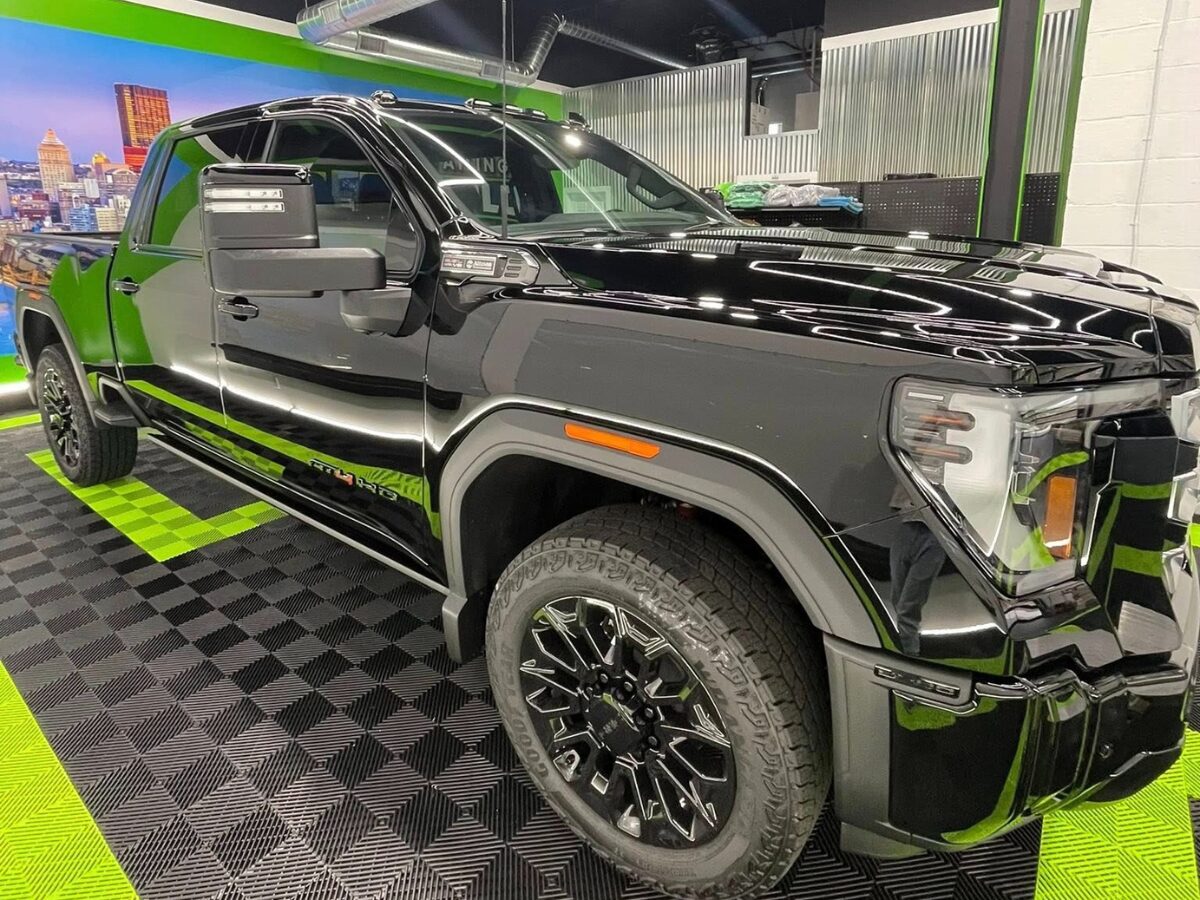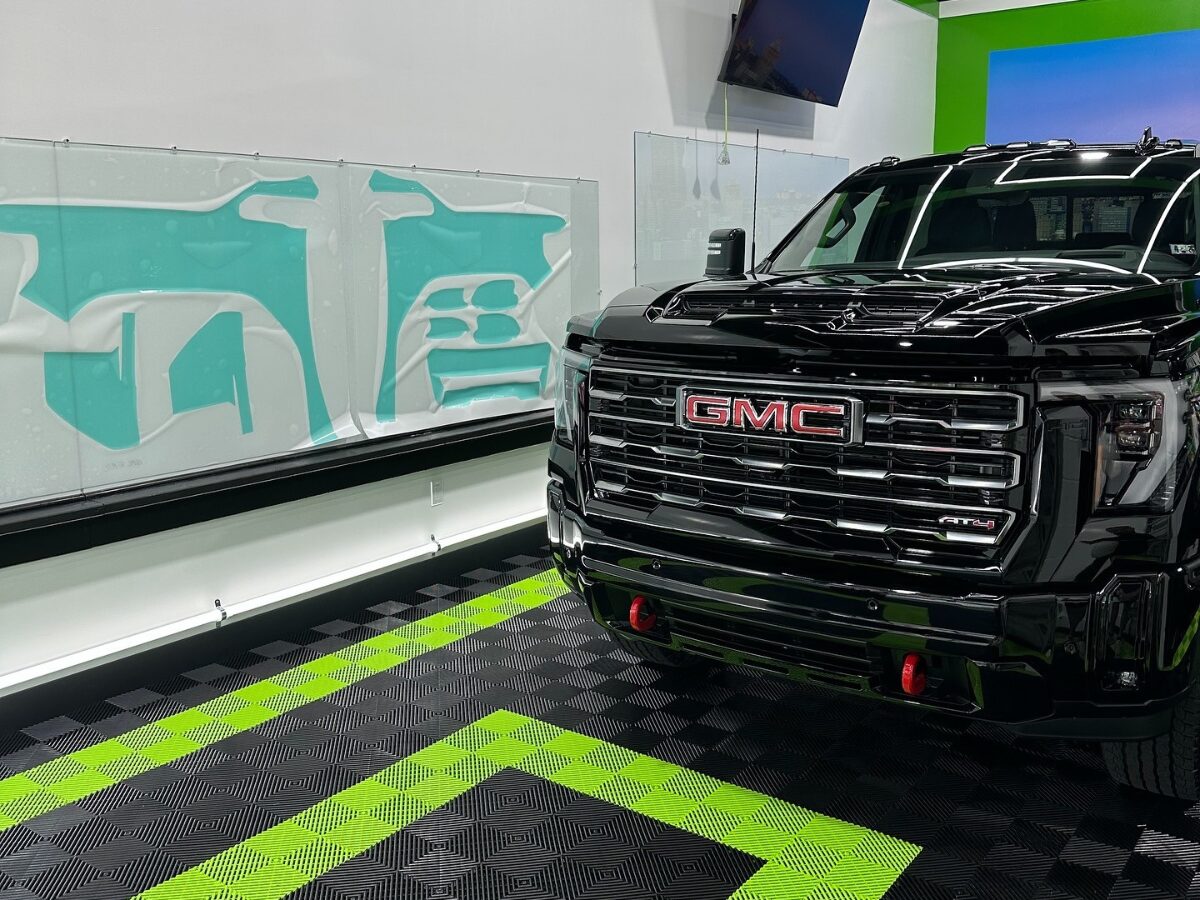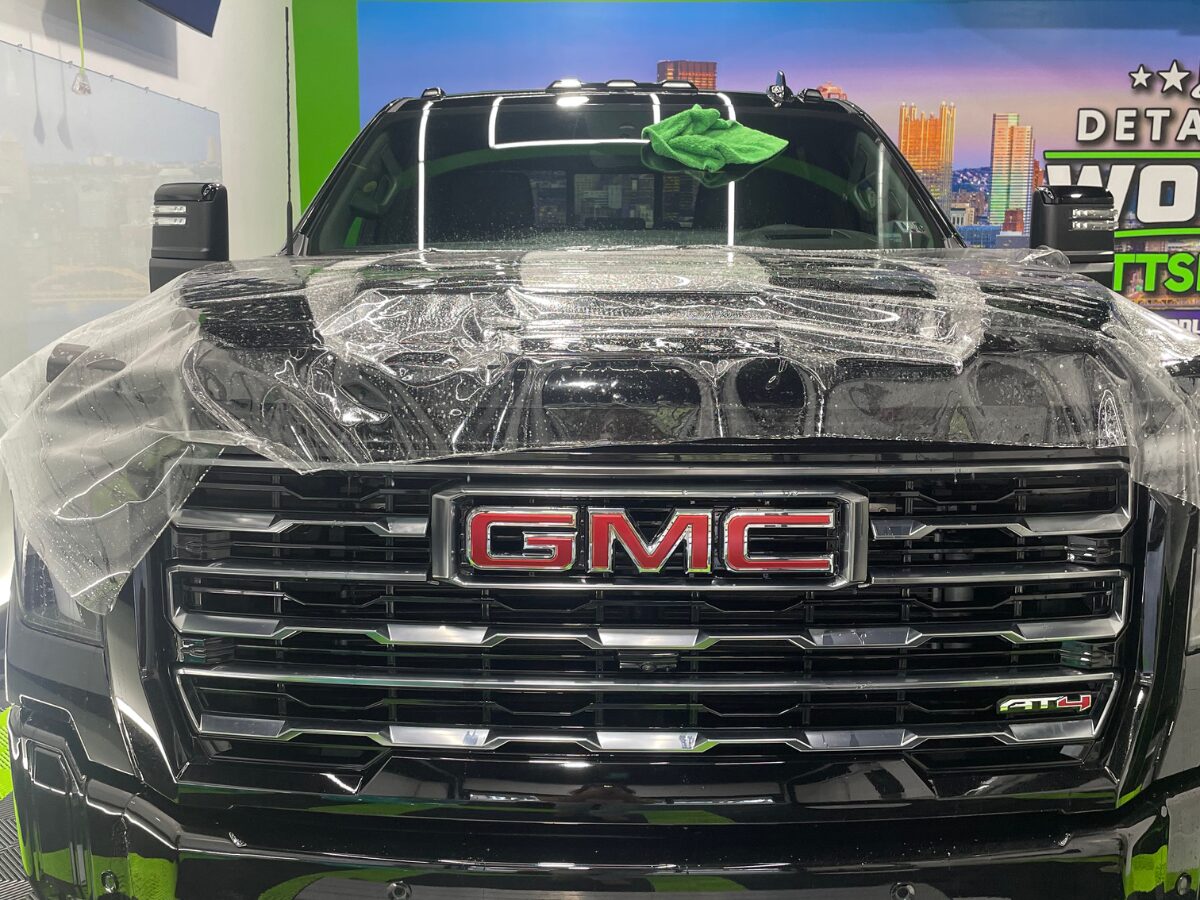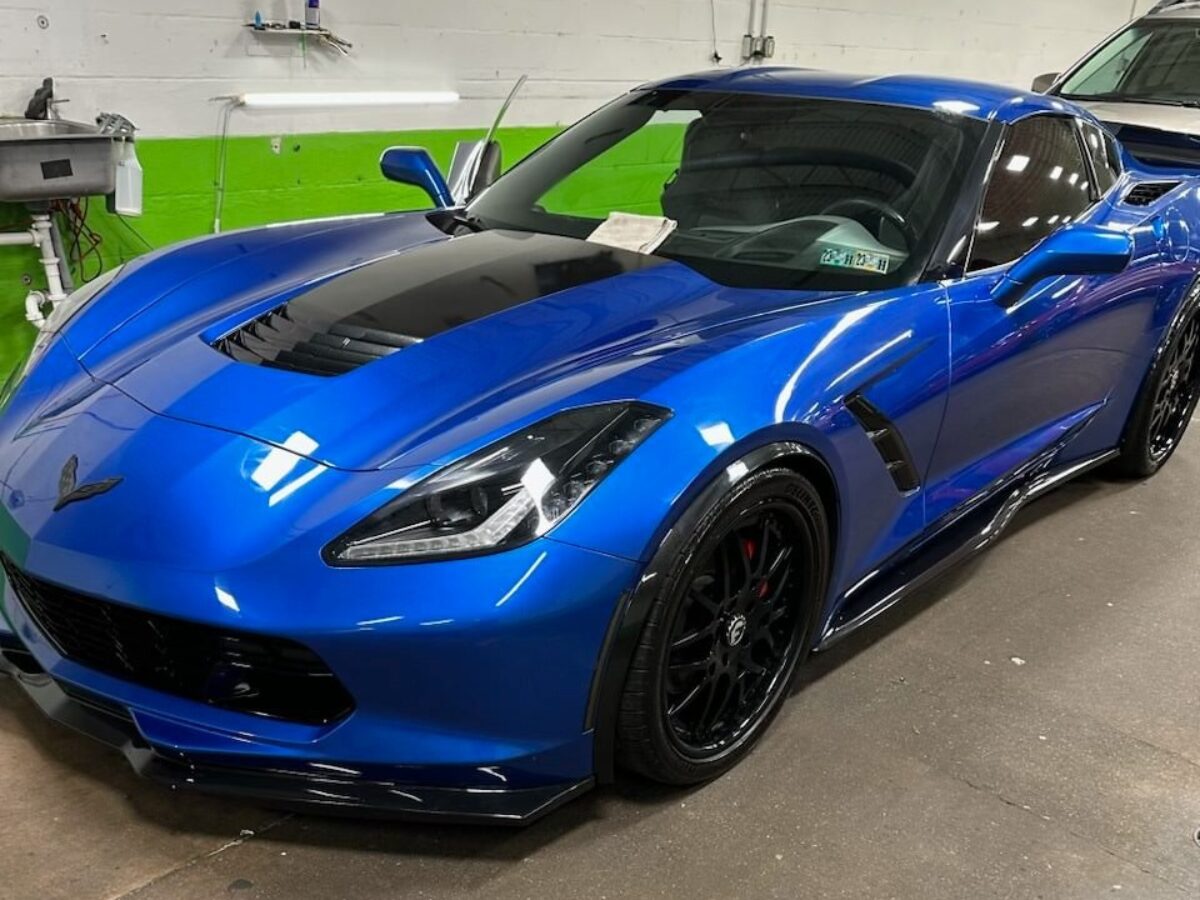
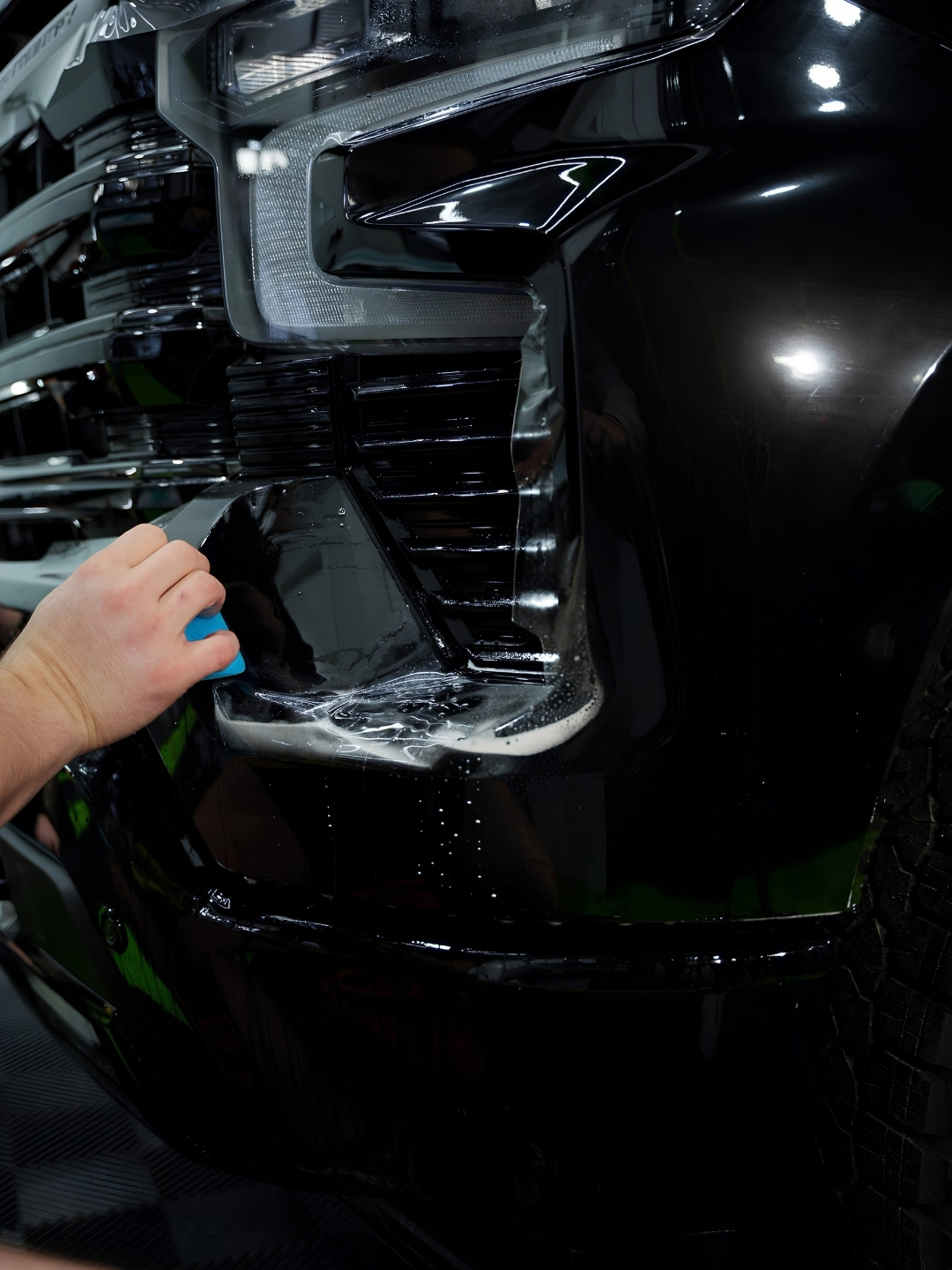
If you’re comparing ways to protect your car’s paint, you’ve probably run into two terms that get lumped together even though they solve different problems: ceramic coating and paint protection film (PPF). Both are legitimate protection options, and Attention II Detail in West Mifflin, PA offers both, but they’re not competing versions of the same thing. Understanding what each one actually does makes it much easier to figure out which option (or combination) makes sense for your vehicle.
The Short Answer
- Ceramic Coating: A liquid polymer that chemically bonds to your clear coat, adding gloss, hydrophobic water-repelling properties, and a slick surface that makes contamination easier to clean off. It does not add meaningful physical thickness to the paint.
- Paint Protection Film (PPF): A physical, clear layer of polyurethane applied directly to the vehicle’s panels. It adds substantial physical thickness designed to absorb and disperse impacts from rock chips, road debris, and minor abrasions.
The fundamental difference comes down to the exact type of damage each product is built to handle.
What Ceramic Coating Protection Offers
Ceramic coating is a chemical-bond product rather than a physical barrier. At Attention II Detail, our professional ceramic coatings protect vehicle paint against key environmental hazards:
- UV Exposure: Reduces the rate at which clear coat oxidizes, fades, and dulls over time under harsh sunlight.
- Chemical Staining: Shields against acidic contaminants like bird droppings, tree sap, and bug residue, allowing them to release easily before etching into the paint.
- Water Spotting: Creates a highly hydrophobic surface that encourages water to bead up and roll off rather than drying in place and leaving mineral deposits.
- Easier Maintenance: Prevents dirt, road tar, and brake dust from strongly bonding to the clear coat, making routine washes significantly faster.
What ceramic coating does not meaningfully do is absorb physical impacts. A coated hood remains vulnerable to rock chips, heavy gravel, or parking lot scratches because the coating is an ultra-thin, hard chemical layer on top of the clear coat, not a cushioned barrier.
What Paint Protection Film (PPF) Offers
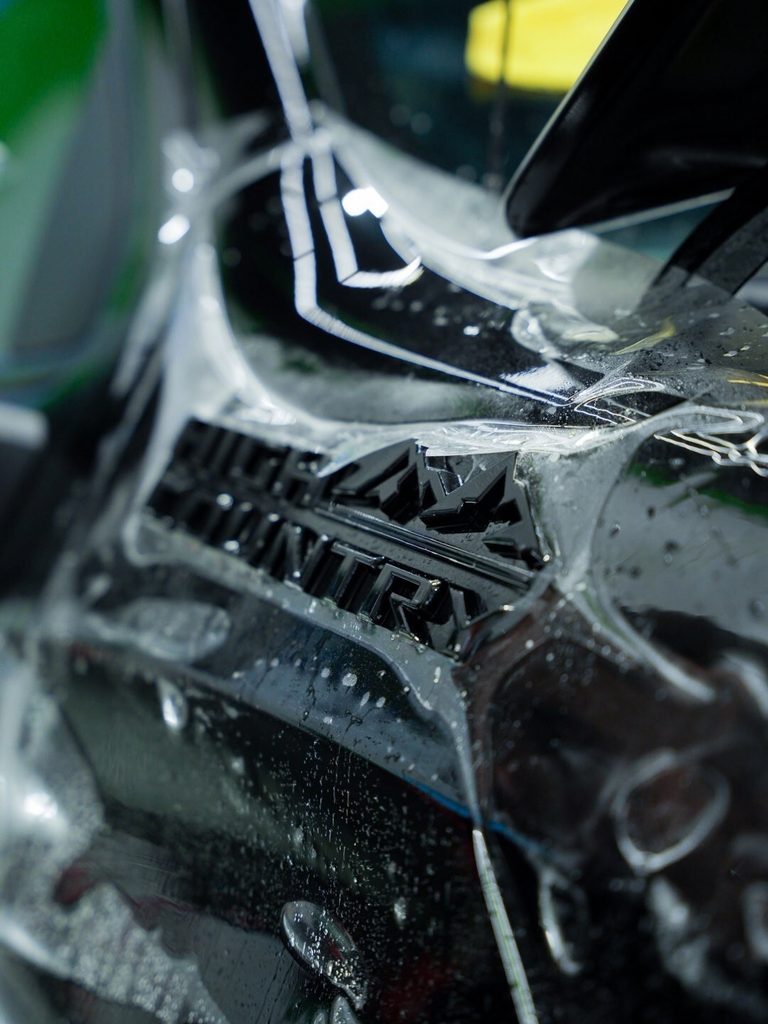
Paint Protection Film is engineered specifically for the physical impact damage that ceramic coating cannot prevent:
- Rock Chips and Road Debris: The physical thickness of polyurethane absorbs and disperses energy from flying stones, road salt, and debris encountered on Pittsburgh highways.
- Minor Scuffs and Light Abrasions: Modern premium PPF includes a self-healing clear coat layer that uses ambient heat from the sun or warm water to reflow and eliminate light swirl marks or superficial scratches.
- High-Impact Target Areas: PPF is strategically applied to vulnerable front-end zones, such as the front bumper, hood, fenders, side mirrors, and rocker panels, which take the brunt of daily driving wear.
While highly resilient, PPF is not indestructible. Deep gouges, vandalism, or major collisions can still penetrate the film and damage the underlying paint. It offers a dramatic upgrade in impact resistance rather than absolute invulnerability.
Side-by-Side Comparison
| Feature | Ceramic Coating | Paint Protection Film (PPF) |
| Primary Protection | UV rays, chemical stains, water spots, environmental grime | Rock chips, road debris, gravel impact, minor scratches |
| Physical Impact Defense | Minimal | High impact absorption |
| Gloss & Depth | High gloss and deep color enhancement | Optically clear (can be paired with topcoats for added gloss) |
| Coverage Scope | Typically full vehicle exterior | High-impact zones (front end) or full vehicle wraps |
| Self-Healing Ability | No | Yes (responds to heat) |
| Surface Hydrophobics | Exceptional water-beading | Good (enhanced when paired with a ceramic topcoat) |
| Paint Prep Required | Yes (decontamination & polish) | Yes (thorough paint prep & surface correction) |
| Requires Regular Washing | Yes | Yes |
Combining Ceramic Coating and PPF
You do not have to choose strictly between PPF and ceramic coating. Combining both is one of the most effective paint protection strategies available for vehicle owners in West Mifflin and the surrounding Pittsburgh area.
When combined, PPF is applied first to high-impact areas like the front bumper, hood, and mirrors to handle physical road debris. A professional ceramic coating is then applied over the entire vehicle, including over the top of the PPF. Premium films are engineered to accept ceramic topcoats seamlessly. In this setup, PPF absorbs stone impacts while the ceramic coating provides extreme hydrophobic properties, UV resistance, and simple cleaning across the entire vehicle.
Surface Preparation Is Essential for Both
Neither ceramic coating nor PPF should ever be installed over dirty, contaminated, or heavily swirled paint. Both treatments require thorough surface preparation beforehand:
- Decontamination: Removing embedded iron particles, tar, tree sap, and road grime using dedicated chemical removers and clay bars.
- Paint Inspection & Correction: Machine polishing out existing swirl marks, scratches, and oxidation.
Because PPF and ceramic coating are optically clear, applying them over uncorrected paint locks in those existing defects underneath. Proper prep ensures maximum adhesion and a flawless visual finish. For a detailed breakdown of this process, review our guide on preparing your vehicle for ceramic coating.
Choosing the Right Protection for Your Car
To determine which protection option best fits your needs, consider the following factors:
Primary Protection Goals
If your main priority is easy washing, deep paint gloss, and protection against tree sap or water spots, a standalone ceramic coating is an excellent choice. If your primary concern is preventing stone chips on daily highway commutes, PPF is the ideal solution.
Vehicle Usage & Driving Conditions
Daily drivers frequently traveling major highways face a constant barrage of stone impacts, making front-end PPF a smart investment. Vehicles driven primarily on local streets or kept garaged may find full-vehicle ceramic coating more than sufficient.
Vehicle Ownership Horizon
If you plan to keep a new or high-value vehicle for many years and want to preserve factory paint for maximum resale value, applying PPF to vulnerable areas combined with ceramic coating delivers the highest level of long-term preservation.
How Each Option Ages Over Time
Understanding how these products age over years of use helps set accurate care expectations:
- Ceramic Coating Aging: Over time, a ceramic coating slowly loses its extreme hydrophobic water-beading properties as environmental contaminants settle on the surface. Routine maintenance washes and periodic booster treatments revitalize the coating’s performance, allowing it to maintain protection for years.
- PPF Aging: Premium polyurethane films maintain clarity and self-healing performance for years. Eventually, after prolonged exposure to severe weather, road salt, and UV rays, older films may show wear at outer edges or gradual dulling. When PPF reaches the end of its functional life, the film can be safely peeled off and replaced without damaging the underlying factory paint.
Neither product replaces normal car care, but both significantly extend the beauty and longevity of your vehicle’s exterior.
Quoting and Service Scopes
Because vehicle dimensions, paint conditions, and protection goals vary, pricing and installation timelines are customized per project:
- Partial Coverage: Front-end PPF packages (covering the front bumper, full hood, fenders, and mirrors) require less installation time than full-vehicle wraps.
- Paint Condition Factors: Older or heavily swirled paint requires additional paint correction time before film or coating application.
- Turnaround Times: Proper surface decontamination, precise film trimming, ceramic application, and indoor curing times typically require vehicles to remain in our climate-controlled facility for 1 to 3 days depending on the scope of work.
Our team at Attention II Detail provides itemized estimates prior to booking, outlining the exact prep steps, film coverage zones, and coating products recommended for your car.
Common Misconceptions Clarified
- “Ceramic coating is just a cheaper version of PPF.” False. They perform entirely different functions. Ceramic coating provides chemical and environmental protection; PPF provides physical impact resistance.
- “PPF means I don’t need to wash my car as often.” False. Road grime, winter salt, and dirt still accumulate on film. Regular washing is required to keep PPF clean and preserve its self-healing topcoat.
- “Ceramic coating fills in existing swirl marks.” False. Ceramic coatings are ultra-thin and transparent; they amplify the appearance of the surface underneath. Any existing scratches must be corrected before application.
Warranty and Coverage Details
Both professional PPF installations and ceramic coatings applied by Attention II Detail carry manufacturer-backed warranty coverage. These warranties protect against issues such as yellowing, bubbling, cracking, or premature coating failure when maintained according to recommended care guidelines. During your consultation, our team provides full written warranty documentation for the specific film and coating products selected.
Practical Real-World Scenarios
- Highway Commuters: A driver commuting daily on regional expressways benefits most from a Partial Front-End Paint Protection Film package paired with a full-body Ceramic Coating.
- Local & Weekend Vehicles: A vehicle kept in a garage and driven mainly for weekend errands receives maximum aesthetic enhancement and ease of care from a multi-year ceramic coating package.
- New Vehicle Delivery: Applying PPF immediately after taking delivery of a new vehicle protects pristine factory paint before stone chips can occur.
Making the Right Choice for Your Vehicle
Both Ceramic Coating and Paint Protection Film offer powerful defense for your vehicle’s paintwork, but they excel in completely different areas. Ceramic coating provides unmatched gloss, hydrophobic ease of cleaning, and environmental defense. PPF delivers thick, physical impact resistance against highway stone chips and road debris.
If you are evaluating paint protection options for your vehicle in West Mifflin, PA, contact the detailing specialists at Attention II Detail. Our team will inspect your paint condition, discuss your driving habits, and help you select the exact protection package that fits your goals and budget.
Frequently Asked Questions
Does ceramic coating protect against rock chips?
No. Ceramic coating is a thin chemical layer that shields paint from UV rays, bird droppings, and water spots, but it lacks the physical thickness required to absorb stone impacts.
Is paint protection film better than ceramic coating?
Neither is strictly better; they serve different purposes. PPF is designed for physical impact defense against debris, while ceramic coating is built for gloss, UV defense, and hydrophobic self-cleaning performance.
Can you apply ceramic coating over paint protection film?
Yes. Applying a compatible ceramic coating over PPF adds hydrophobic water-beading and self-cleaning benefits to the impact-resistant film underneath.
Does PPF change how a car looks?
Modern high-quality films are optically clear and virtually invisible when professionally installed, maintaining your vehicle’s original paint clarity and color depth.
Do I still need to wash my car if it has PPF or ceramic coating?
Yes. Both products require regular washing to remove surface dirt, road salt, and environmental buildup. Coating and film make washing significantly easier but do not eliminate the need for routine maintenance.
Does either option come with a warranty?
Yes. Professional PPF and ceramic coating installations through Attention II Detail include manufacturer warranties covering defects, yellowing, peeling, or premature product degradation.
Which option is best for a daily driver in West Mifflin?
Daily drivers exposed to winter road salt and highway gravel benefit greatly from front-end PPF combined with a full-body ceramic coating for comprehensive impact and environmental protection.