
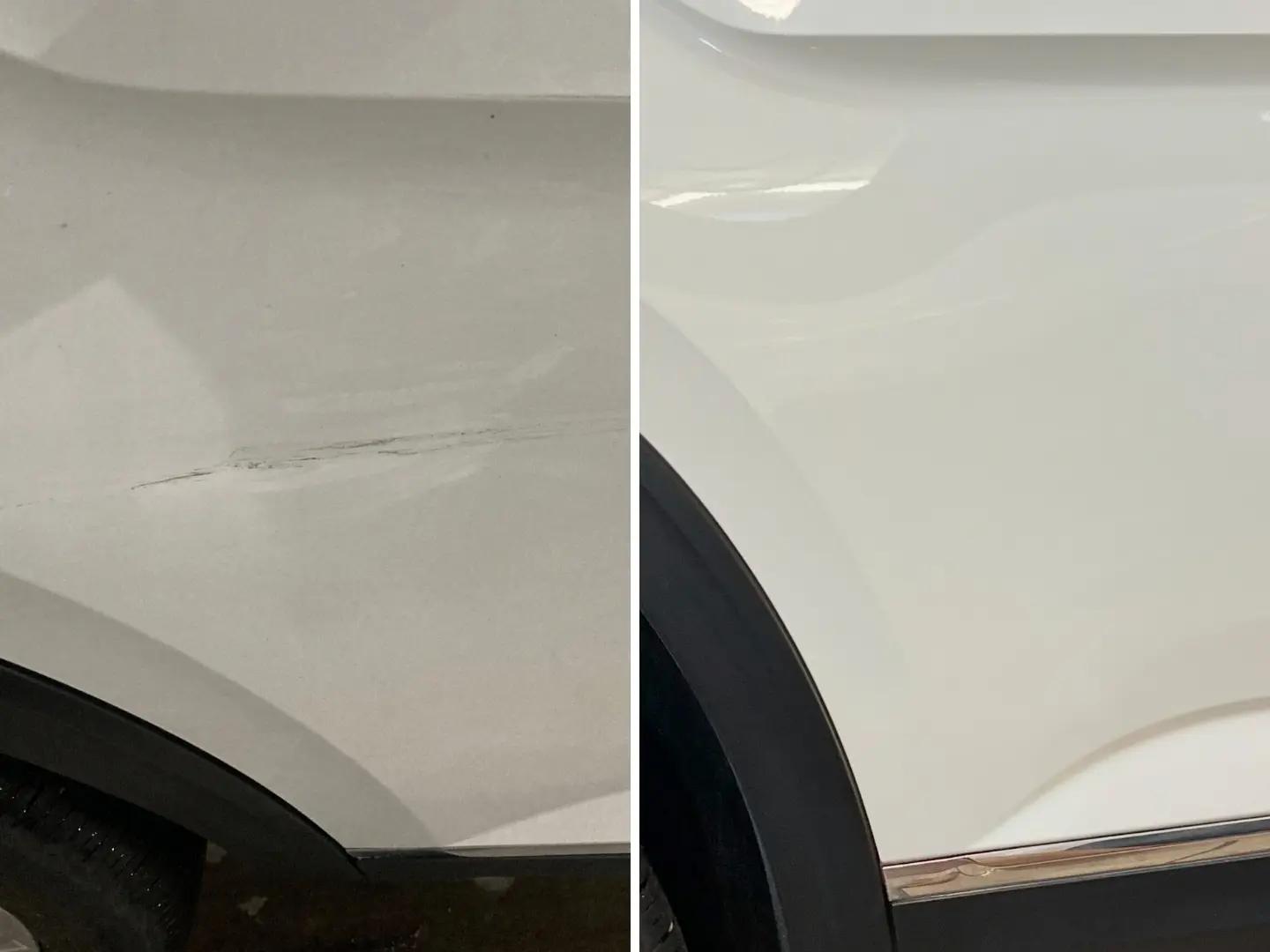
A dent doesn’t always mean a trip to a body shop for sanding, filler, and repainting. In many cases, whether it’s a shopping cart ding, hail damage, or a minor parking lot bump, paintless dent repair can restore the damaged panel without disturbing the factory paint. But PDR isn’t the right solution for every dent, and understanding what makes a dent repairable can help you decide whether this approach is worth considering before scheduling an assessment.
What Paintless Dent Repair Actually Is
Paintless dent repair (PDR) is a technique where a technician reshapes a damaged vehicle panel without the sanding, filling, or repainting typically associated with traditional bodywork. Technicians commonly access the back of the damaged panel through existing openings or by carefully removing interior trim, then use specialized tools to gradually manipulate the metal back toward its original shape.
In some situations, PDR technicians can also use glue-pulling techniques to work on dents where access from behind is limited. Because the process aims to preserve the original paint, it offers a practical advantage when a dent can be repaired without refinishing the panel.
What Makes a Dent a Good Candidate for PDR
Not every dent is created equal, and a few specific factors determine whether PDR is realistic.
The Paint Isn’t Cracked or Chipped
PDR focuses on reshaping the panel rather than repairing damaged paint. If an impact cracks or chips the clear coat or base coat, reshaping the metal alone will not restore the damaged finish.
In these cases, a combination of PDR and conventional refinishing may be possible, but PDR by itself cannot correct the paint damage.
The Dent Isn’t Too Sharp or Deep
Shallow, rounded dents, such as those caused by hail or light impacts, are often good candidates because the metal may be reshaped without excessive stretching.
Some creased or deeper dents can also be repaired using PDR. However, the outcome depends on the severity of the crease, how much the metal has stretched, and whether the paint remains intact. Severe deformation may require traditional bodywork.
The Panel Is Accessible for Repair
Access to the damaged area influences how a technician approaches the repair. Doors, hoods, and certain quarter panels often provide opportunities to work from behind the metal through existing openings or after removing interior components.
When rear access is restricted, glue-pulling may be an alternative for certain dents. However, not every panel material, finish, or damaged area is suitable for this method.
The Dent Isn’t Severely Distorted Along a Body Line or Edge
Dents located directly on sharp body creases or panel edges are often more challenging to correct because those areas have complex shapes and may resist reshaping.
Their location does not automatically rule out PDR, but a professional assessment is especially important before deciding whether the original contour can be restored.

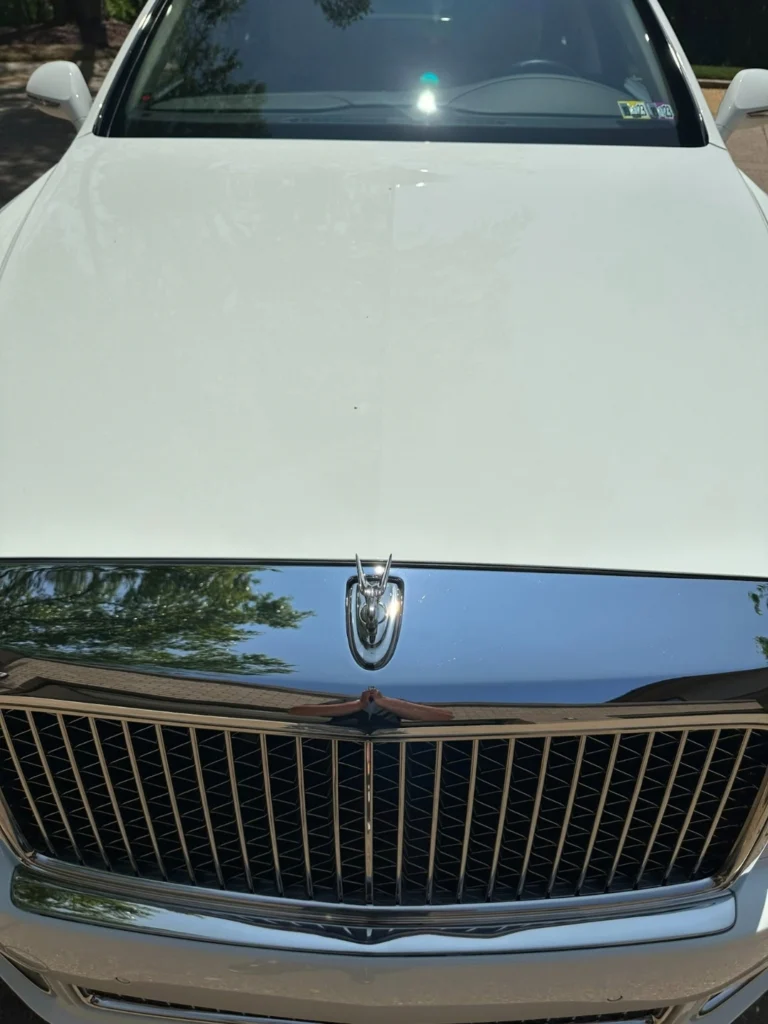
Common Situations Where PDR Works Well
- Hail damage: Many hail dents are shallow and rounded, making them suitable for PDR when the paint remains intact and the metal has not been excessively stretched.
- Door dings: Small dents caused by nearby vehicle doors or shopping carts are often strong PDR candidates, particularly when they occur on accessible sections of a panel.
- Minor parking lot dents: Low-speed impacts that leave the paint undamaged may be repairable through PDR, depending on the dent’s depth, shape, and location.
Although these are common applications, the cause of a dent does not guarantee that PDR will work. The condition of the damaged panel remains the deciding factor.
When PDR Isn’t the Right Fit
PDR may not provide a complete repair in situations involving:
- Cracked or chipped paint that requires additional refinishing
- Severe creases where the metal has been stretched or sharply folded
- Restricted access that prevents safe use of conventional PDR tools or suitable alternative techniques
- Previous repairs involving body filler, which can complicate paintless repair and may be damaged during the process
- Extensive damage affecting multiple panels or structural components
Some of these conditions make PDR more difficult rather than impossible. The appropriate repair method depends on the individual panel and the extent of damage.
When the metal or paint cannot be restored adequately through PDR alone, traditional bodywork or a combination of repair methods may be more appropriate.
Body Lines, Character Creases, and Modern Vehicle Design
Modern vehicles frequently incorporate sharp character lines, sculpted panels, and complex body contours. These design features can make certain dents more challenging to repair than similar damage on a broad, relatively flat surface.
A dent along a pronounced body line may affect both the visible crease and the surrounding metal. Restoring the original shape requires careful control of the panel’s contours rather than simply pushing the deepest point outward.
The extent of stretching, panel construction, and available tool access all influence the result. This is particularly relevant for vehicles with angular styling, where a small dent in a prominent character line may require more precision than a larger shallow dent elsewhere.
Multiple Dents vs. a Single Dent
A single isolated ding is usually straightforward to assess based on its depth, shape, paint condition, and location.
Vehicles with multiple dents, particularly after a hailstorm, require a more detailed evaluation. Individual dents on the same vehicle may differ in severity, even when they were caused by the same event.
For example, several shallow hail dents might qualify for PDR while another dent on a sharp body line requires a different approach.
This does not automatically mean every damaged panel needs traditional bodywork. A repair plan can account for which dents qualify for paintless repair and which require additional treatment.
PDR vs. Traditional Bodywork
| Feature | Paintless Dent Repair | Traditional Bodywork |
| Primary method | Reshapes the existing panel without repainting | May involve reshaping, filler, sanding, or repainting |
| Best suited for | Repairable dents with intact paint | More severe deformation, paint damage, or repairs requiring refinishing |
| Factory finish | Preserved when PDR is successful | May be altered if refinishing is necessary |
| Typical turnaround | Often faster for suitable dents | May take longer when painting or curing is involved |
| Paint matching | Not required when paint remains intact | Required when repainting is performed |
PDR and traditional bodywork serve different purposes. The better option depends on the actual damage rather than a general preference for one method.
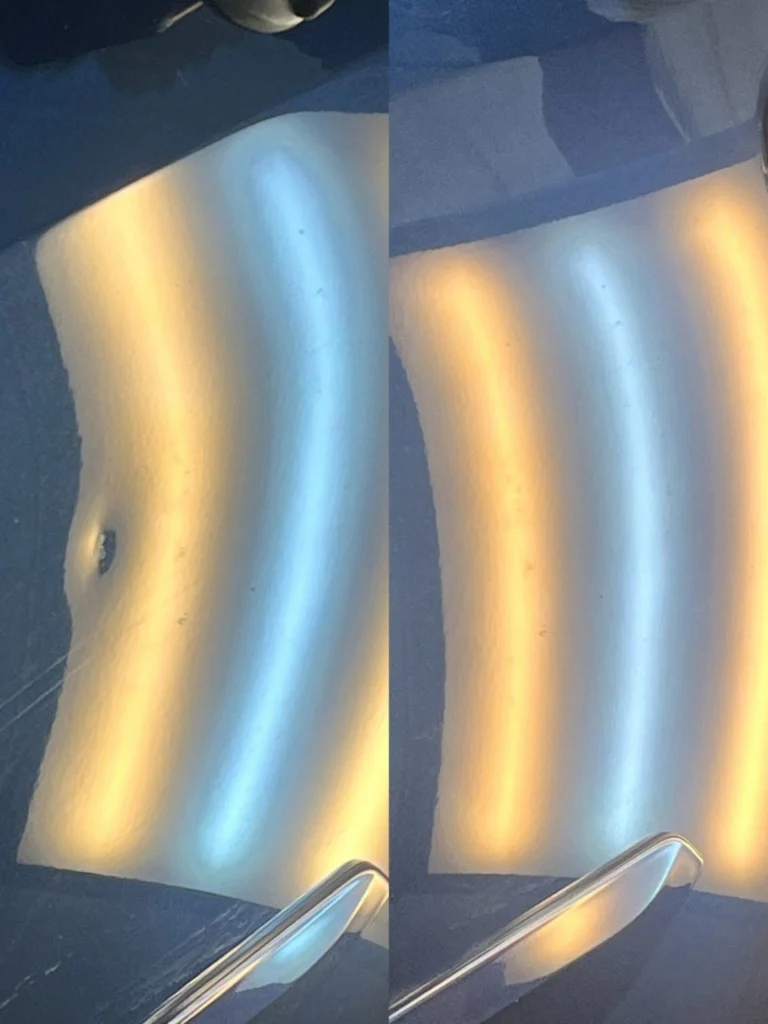
Why Preserving the Factory Finish Matters
Keeping the factory paint intact is one of the main advantages of paintless dent repair.
Factory finishes are applied under controlled manufacturing conditions, and preserving them can help maintain a vehicle’s original appearance while avoiding the potential color-matching challenges associated with repainting.
For newer vehicles, leased vehicles, or cars being prepared for resale, this can be a meaningful consideration. However, preserving factory paint does not guarantee a particular resale value, as buyers also consider the vehicle’s overall condition, accident history, mileage, and other factors.
For additional context on the benefits of preserving original paintwork, Attention II Detail explains how professional paintless dent repair helps maintain a vehicle’s appearance.
Panel Types and How They Affect PDR
Not all vehicle panels respond to PDR in the same way.
Panels with relatively simple curves and suitable access, such as many doors, hoods, and quarter panels, may be easier to work on than sections with complicated body lines or limited access.
The panel’s material also matters. Aluminum panels, increasingly used on newer vehicles, behave differently from steel because of their distinct forming and deformation characteristics.
These differences can influence the tools, techniques, and time required to reshape the metal accurately.
Neither aluminum construction nor complex panel geometry automatically rules out PDR. They simply make a thorough assessment more important before committing to a repair method.
What to Expect During a PDR Assessment
Because paintless dent repair depends on the specific characteristics of each dent, a professional assessment is the most reliable way to determine whether the damage is suitable for the process.
At Attention II Detail, the repair process begins with evaluating the dent before selecting the appropriate approach. A technician examines its size, depth, location, and paint condition, then considers how the damaged area can be accessed and reshaped.
Specialized lighting and reflection tools may be used during PDR assessments to reveal subtle distortions that are difficult to see under ordinary lighting. These tools help technicians evaluate the panel’s contours and monitor the correction process.
You can learn more about the equipment commonly used in the process through our paintless dent repair tools guide.
Photos can sometimes help communicate the damage before an appointment, but they may not reveal every detail needed to determine whether PDR will be successful.
What to Do Right After You Notice a Dent
If you’ve just discovered a dent, a few practical steps can help before having it assessed:
- Take photos in good lighting. Photograph the damage from several angles so the dent’s outline, location, and surrounding panel are visible.
- Avoid pressing on the dent yourself. Attempting to push or pull out a dent without the proper technique can stretch the metal, damage the paint, or make professional repair more difficult.
- Check for paint damage. Look closely for chips, cracks, or exposed metal, particularly if the dent resulted from a sharp impact.
- Review insurance requirements when relevant. If the damage came from hail or another potentially covered event, check your policy’s reporting and documentation requirements.
These steps help preserve the condition of the damaged area while you decide on the appropriate repair.
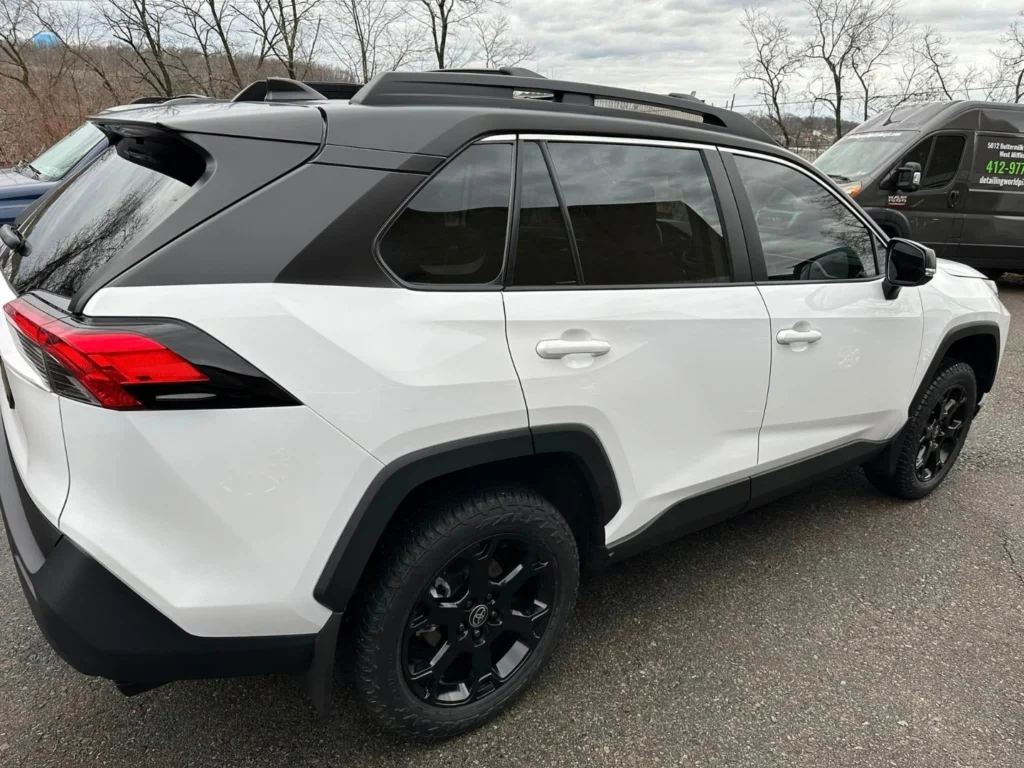
How Long Does Paintless Dent Repair Typically Take?
Turnaround time depends on the number of dents, their severity, the affected panels, and the access required for repair.
A single minor door ding may take considerably less time than widespread hail damage affecting multiple panels.
Attention II Detail notes that some minor dents may be repaired in under an hour, while more extensive cases can require up to a day or longer depending on the work involved. These are general expectations rather than guaranteed completion times.
Because PDR does not normally involve repainting, it can often be completed more quickly than conventional repairs requiring paint preparation and curing.
The actual timeline should be determined after the damaged area has been evaluated.
Common Myths About Paintless Dent Repair
“PDR is just a temporary fix.” This isn’t accurate. When a suitable dent is successfully repaired, the metal is physically reshaped rather than temporarily concealed with filler. However, the repaired panel can still sustain new damage.
“Any dent can be fixed with PDR if you find a good enough technician.” Technician skill matters, but it cannot eliminate every limitation created by severely stretched metal, damaged paint, or structural deformation.
“PDR devalues a car compared to a repaint.” Preserving original paint can be advantageous, particularly when repainting is unnecessary. However, a vehicle’s resale value depends on many factors, and no repair technique guarantees a specific financial outcome.
PDR and Insurance Claims
Hail damage and certain other types of vehicle damage may be covered under an applicable auto insurance policy.
PDR is an established repair method that may be included in an insurer-approved repair plan when the damage qualifies. However, coverage depends on the policy, circumstances of the damage, deductible, and insurer’s claim requirements.
If you’re considering filing a claim, document the damage and contact your insurance provider to understand the next steps.
A repair shop may assist with estimates or damage documentation, depending on its process, but insurance approval and coverage decisions remain subject to the applicable policy and insurer.
When PDR and Traditional Bodywork Are Used Together
Some vehicles have a combination of damage that cannot be addressed entirely through one repair method.
A vehicle with hail damage across several panels, for example, may have many shallow dents suitable for PDR alongside a smaller number of areas with cracked paint or more severe deformation.
In those circumstances, technicians may recommend paintless repair for the qualifying dents and conventional bodywork for the remaining damage.
This approach can help preserve original paint wherever possible without overlooking areas that require additional repair.
The goal is not to use PDR for every dent, but to select the appropriate method based on the condition of each affected area.
Frequently Asked Questions
Does paintless dent repair actually work?
Yes. PDR is an established repair technique that can effectively restore many dents without repainting when the original paint remains intact and the panel can be reshaped successfully. Results depend on the dent’s location, severity, and metal condition.
Can PDR fix a dent with a crease in it?
Sometimes. Certain creased dents can be repaired through PDR, but the outcome depends on how sharply the metal has folded, how much it has stretched, and whether the paint remains intact. Severe creases may require traditional bodywork.
Is PDR a good option for hail damage?
Often, yes. Many hail dents are shallow and rounded, making them good candidates for PDR. However, larger impacts, cracked paint, or severe metal deformation may require additional repair methods.
How do I know if my dent is a good candidate before booking an appointment?
Look for intact paint, limited metal deformation, and a dent that appears relatively shallow rather than sharply folded. These are useful indicators, but a professional assessment is the best way to determine whether PDR is suitable.
Does paintless dent repair affect my car’s resale value?
PDR can help preserve the original factory finish, which may be beneficial when maintaining a vehicle’s condition for resale. However, the actual resale value depends on the overall condition, repair history, mileage, and market factors.
Is PDR more affordable than traditional bodywork?
For suitable dents, PDR can be less expensive because it generally avoids paint materials, fillers, and extensive refinishing work. At Attention II Detail, Paintless Dent Repair pricing starts at $80 per panel. Final pricing depends on factors such as dent size, depth, location, accessibility, and overall damage.
Find Out If Your Dent Qualifies for PDR in West Mifflin
Not every dent requires repainting, but choosing the right repair method starts with understanding the damage. Whether you’re dealing with a small door ding, a crease, or several dents after a storm, a professional assessment can help determine whether Paintless Dent Repair is the appropriate solution.
At Attention II Detail, we help vehicle owners in West Mifflin and the greater Pittsburgh area evaluate their repair options while prioritizing the preservation of original paint whenever possible.
Explore our Paintless Dent Repair services or call (412) 469-9020 to discuss your vehicle’s damage and request an estimate.


