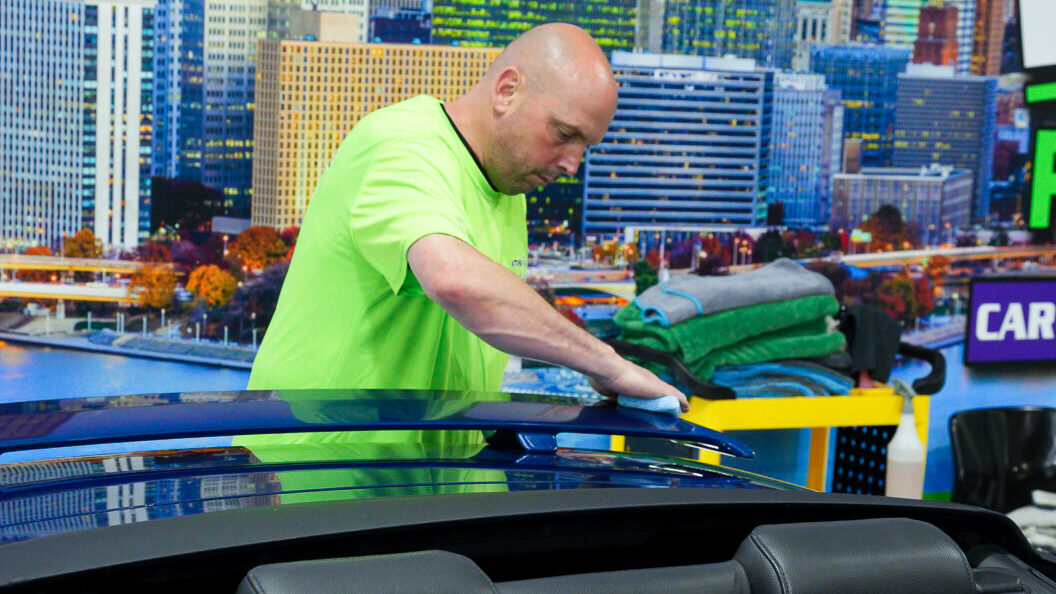
Many issues people refer to as “bad paint” are actually car paint defects within the clear coat, not just surface dirt. While wax can temporarily conceal minor hazing and dents, it cannot eliminate scratches, reverse oxidation, or fully restore lost clarity caused by a poor paint job or other car paint defects. Swirl marks are micro-scratches caused by friction and dirty wash materials, while light scratches result from clear-coat marring due to contact with dry wiping, brushes, or gritty towels. Oxidation, driven by UV exposure, breaks down the clear coat and transforms gloss into a chalky haze. Dullness occurs when countless tiny car paint defects scatter light rather than reflecting it cleanly. The only true solution for these car paint defects is professional, abrasion-based polishing that carefully levels the clear coat to permanently restore clarity and gloss.
Introduction
In this article, you’ll discover the real causes behind car paint defects and learn why issues like swirl marks, scratches, oxidation, and dullness are more than just surface problems. We’ll explain how everyday habits, environmental factors, and improper washing gradually damage your vehicle’s clear coat—and why wax or quick detailing sprays can’t truly fix these defects. By reading to the end, you’ll gain a clear understanding of the most common car paint defects, the limitations of temporary fixes, and how professional car paint correction services can permanently restore your vehicle’s gloss and clarity.
The Clear Coat Is the Real Battleground
Modern automotive paint is a layered system: primer, base color, then clear coat on top. The clear coat is what provides gloss and (when healthy) optical depth. It is also the layer that takes the daily hits.
Most car paint defects that frustrate owners live in that clear coat. They are not “on” the paint; they are “in” the top layer, meaning you cannot wipe them away.
A helpful reality check is understanding film thickness. Modern OEM paint systems are intentionally thin, and the layer you can safely correct is even thinner than most people realize. In fact, total paint thickness is often just a few thousandths of an inch, making careful and professional correction essential to avoid permanent damage.
That thinness is why aggressive DIY fixes can backfire, and also why “just wax it” rarely changes the underlying look for long.
Common Car Paint Defects: Causes, Damage, and Whether Wax Can Fix Them
When drivers notice paint defects in cars, they’re usually observing a few persistent issues that become visible under sunlight, parking lot LEDs, or even a phone flashlight at night. These are the common car paint defects that tend to worsen gradually, leading many people to blame the paint itself rather than the underlying causes or their maintenance habits. Understanding the causes of paint defects, the type of damage they create, and whether wax can truly fix them is essential for maintaining your vehicle’s appearance.
Here’s a quick guide to help you identify what you’re seeing, understand the root causes, and know why wax is not a permanent solution:
| What You See | What It Usually Is | Most Common Cause | Why Wax Won’t Fix It |
| Circular “spiderweb” patterns | Swirl marks (micro-marring) | Dirty wash media, automatic car washes | Wax may fill briefly, but scratches remain |
| Straight, shallow lines | Light scratches | Dry wiping, gritty towels, improper drying | Wax hides, but does not remove material |
| Chalky haze, faded look | Oxidation/clear coat degradation | UV exposure, age, neglect | Wax adds gloss on top of a compromised surface |
| Flat reflections, low depth | General haze from micro-scratches | Repeated friction over time | Wax cannot level the clear coat |
| Spots that don’t wash off | Mineral deposits or etching | Hard water, bird droppings, tree sap | Wax seals over the defect, not the crater |
In summary, gloss and shine are determined by how smoothly the clear coat reflects light. Tiny scratches, pits, and other car paint defects scatter light in all directions, resulting in a dull, lifeless appearance that wax alone cannot restore.
Washing and Drying Habits: Small Choices That Add Up
Ask a detailer what the top causes of paint defects are and you will hear the same theme: friction plus contamination. You can use the best soap in the world and still grind grit across the paint if the wash media is dirty or the technique is rushed.
This is where swirl marks are born. They come from particles that are harder than the clear coat. Think road dust, brake dust, winter sand, or even tiny bits of soil from a driveway. Once trapped in a sponge or towel, they act like sandpaper.
Drying is just as risky. A quick wipe with a less-than-clean towel after a rinse can create fresh marring in seconds, especially on darker colors where micro-scratches show easily.
If you want a simple mindset shift, treat every touch as a polishing step. If the surface or tool has grit, you are “polishing” in the wrong direction.
Automatic Car Washes: Fast, Convenient, and Physically Unforgiving
A lot of people swear they use “touchless” washes and still see marks. Many facilities are not truly touchless, and even the ones that are can leave mineral spotting when water quality and drying systems are imperfect.
With contact washes, the issue is easy to picture: rotating brushes and hanging strips touch hundreds of cars a day, and they cannot be perfectly cleaned between vehicles. That means you are renting friction that may already be loaded with abrasive debris.
It’s important to be cautious with brush-style car washes, as they can leave fine scratches in your vehicle’s paint, gradually contributing to visible car paint defects over time.
This is one reason car paint defects often appear “out of nowhere” after a winter of weekly tunnel washes. The damage is cumulative, and it reveals itself, much like chips in the paint surface, when the sun hits the panel at an angle.
Environmental Fallout: The Damage You Do Not Notice Until It Is Set
Some causes of paint defects have nothing to do with washing. They come from what lands on the vehicle while it sits outside or moves through traffic.
Industrial fallout (tiny ferrous particles), brake dust, rail dust, and construction debris can embed in the clear coat. Over time, embedded contamination can oxidize and stain or create roughness that makes washing riskier. Tree sap and bug residue can harden into stubborn deposits. Bird droppings can etch quickly, especially in heat.
The International Detailing Association warns that bird droppings and insect remains can damage automotive finishes if left in place. Source: https://the-ida.com/
This is why paint defects in cars are often worse on horizontal surfaces (hood, roof, trunk) and on the side that faces sprinklers or prevailing wind.
One more factor many people miss is water chemistry. Hard water minerals can leave deposits that bake on under sun. Those spots are not always “on top” of wax; they can be bonded to, or etched into, the clear coat.
UV Exposure and Oxidation: Why Gloss Fades Even If You “Keep It Clean”
Oxidation sounds old-fashioned, like something that only happens to single-stage paint from decades ago. Clear coats, though, still degrade. UV radiation breaks down resins and additives over time, and the surface loses its ability to reflect light cleanly.
The U.S. Environmental Protection Agency describes the UV Index as “a forecast of the expected risk of overexposure to UV radiation from the sun.” Source: https://www.epa.gov/sunsafety/uv-index-scale-0
Higher UV exposure does not merely fade color; it can also contribute to a top layer that looks hazy or tired. In real life, UV damage usually teams up with other factors: heat, infrequent washing, and bonded contamination that holds grime against the paint.
When the finish looks dull even after a thorough wash, that is often the clear coat’s surface texture changing at a microscopic level. Another round of wax may deepen the shine for a week, but it does not rebuild what UV has broken down.
Why Wax and Quick Detailing Sprays Cannot Repair Real Car Paint Defects
Wax has value. It can add gloss, improve water behavior, and reduce how tightly grime bonds to the paint. The limit is mechanical: wax sits on top of the clear coat, while many defects are physical valleys and ridges in the clear coat.
So when someone asks, what is car paint correction really fixing, the best answer is: it fixes the shape of the clear coat surface so light reflects evenly again.
Wax mostly does two things:
- It adds a thin, shiny layer that can look great on already-healthy paint.
- It can “fill” very fine micro-marring temporarily, muting the appearance until the product washes off.
That is why car paint defects often “come back” after two or three washes. They never left.
Wax is designed to protect and enhance the appearance of your paint, but removing car paint defects requires specialized cleaners or abrasives that actually level the surface. Simply applying wax will not eliminate scratches, oxidation, or other imperfections—it takes professional correction to truly restore clarity and gloss.
What Is Car Paint Correction?
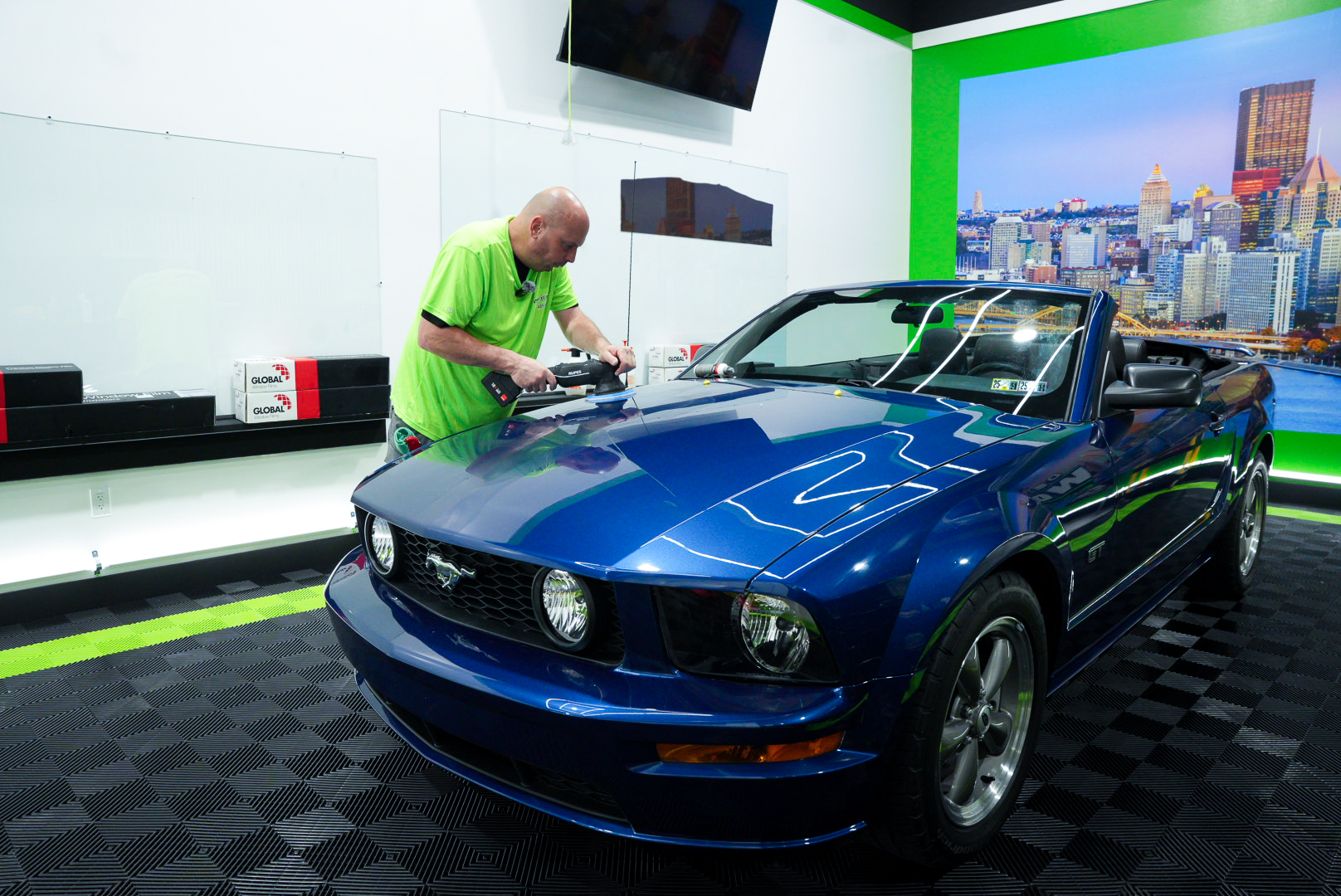
What is car paint correction if you strip away the hype? It is controlled abrasion. A technician uses compounds and polishes, plus pads and machines, to remove a microscopic amount of clear coat so the surface becomes flatter and clearer.
That flattening is what turns hazy reflections into crisp reflections again. It is also why the work must be measured and methodical. You are not “adding” gloss, you are refining the top layer that produces gloss.
A professional car paint correction service typically starts with evaluation: paint thickness readings (when available), defect mapping under proper lighting, and a test spot to confirm the least aggressive approach that produces the desired improvement.
After that, the process usually follows a predictable sequence.
- Wash and decontamination (chemical and mechanical)
- Paint inspection under strong, honest lighting
- Compounding where deeper defects demand it
- Polishing to refine clarity and reduce haze
- Protection (often a sealant or ceramic coating, depending on goals)
Done well, correction can dramatically improve appearance because it addresses the root cause rather than coating over it.
Frequently Asked Questions About Car Paint Defects
1. What are common car paint defects?
Common car paint defects include swirl marks, light scratches, oxidation, dullness, and water spots.
2. What causes car paint defects?
Car paint defects are often caused by improper washing, automatic car washes, environmental contaminants, and UV exposure.
3. Can wax fix car paint defects?
No, wax can only mask minor imperfections temporarily. It cannot remove scratches, oxidation, or restore lost clarity.
4. What is car paint correction?
Car paint correction is a professional process that uses abrasives to remove defects and restore the paint’s clarity and gloss.
5. How can I prevent car paint defects?
Use proper washing techniques, avoid automatic car washes, and protect your car from environmental contaminants and UV rays.
6. Is car paint correction service permanent?
Yes, car paint correction service permanently removes defects, but new damage can occur if proper care isn’t maintained.
When Professional Car Paint Correction Makes Sense, and What to Ask For
If you are seeing common car paint defects across most panels, or if the vehicle looks clean but never looks sharp, it may be time to stop cycling through waxes and try a real correction plan.
A good car paint correction service is not defined by buzzwords. It is defined by process control: inspection lighting, paint readings where possible, test spots, and clear communication about what can and cannot be safely removed.
Before booking, it helps to know what outcome you want. “Perfect” is rarely realistic on a daily driver without removing too much clear coat. “Noticeably clearer with far fewer swirls” often is.
After correction, your maintenance choices matter more than ever. You can preserve the result without becoming obsessive, just consistent.
- Weekly wash: pH-balanced soap, clean mitts, safe drying towel
- Contact rules: never wipe a dry panel, never use a dirty towel
- Decon rhythm: occasional iron remover and a light clay step when needed
- Sun strategy: shade or cover when practical, especially during high UV weeks
That is how you keep car paint defects from reappearing quickly, and how correction stays a restoration rather than a temporary reset.
How to Get Started
If you’re ready to restore your vehicle’s true appearance and finally address those stubborn car paint defects, our team at Attention II Detail is here to help. Our car paint correction service isn’t a one-size-fits-all solution—it’s carefully tailored to your vehicle’s unique needs and your expectations. With our expertise, we can remove years of accumulated defects, revive lost gloss, and deliver a finish that truly stands out. Let us at Attention II Detail show you the remarkable difference that professional car paint correction can make.
Visit us at:
Attention II Detail
5012 Buttermilk Hollow Rd. West Mifflin, PA 15122
Check out our work at:
a2dpgh.com
Call us at:
(412) 469-9020
Social Profile:
Facebook
Instagram
Youtube
Let us help your vehicle reclaim its original shine and clarity—because every car deserves to look its absolute best, free from paint defects.